



· By Steven Wong
The Best Service Dog Breeds, and the Tasks Each One Does
Labrador Retrievers, Golden Retrievers and crosses of the two make up most of the dogs that big US service dog programmes breed. German Shepherds still guide the blind at some schools, Poodle crosses help some people with allergies, and mixed-breed shelter dogs do much of the work with veterans. Breed gets a dog to the starting line. Temperament, health and training get it to the finish.
This guide covers what the programmes actually use, why even purpose-bred dogs often don't make it, and the tasks service dogs are trained to do. With Veterans Day on 11 November, it also covers what the research says about service dogs for veterans with PTSD.
What are the best service dog breeds?
In practice, retrievers. Canine Companions, the largest US assistance dog programme, says "Canine Companions uses Labrador Retrievers, Golden Retrievers, and crosses of the two breeds" (Canine Companions, FAQs). America's VetDogs, which places dogs with veterans and first responders, says "Male and female Labrador Retrievers, Golden Retrievers, and Lab/Golden crosses are used. The dogs are specially bred for temperament, gentleness, and physical soundness" (America's VetDogs, FAQ).
In law, any breed. The Department of Justice says "The ADA does not restrict the type of dog breeds that can be service animals" (DOJ, Frequently Asked Questions about Service Animals and the ADA, 2020). The breed lists below show what tends to work, not what's required. For the legal side, see our guide to service dogs vs emotional support dogs.
Which breeds do the big service dog programmes actually use?
Programmes publish their breed choices, and they're narrower than most "best breeds" lists. NEADS, which trains service and hearing dogs, says "NEADS breeds Labrador Retrievers," though it adds that it "trains both male and female dogs of all shapes and sizes" (NEADS, FAQ). The Seeing Eye, the oldest US guide dog school, says it "breeds its own German shepherds, Labrador retrievers, golden retrievers and Labrador/ golden retriever crosses" (The Seeing Eye, FAQ, 2026).

Sources: each programme's own published FAQ or breed pages; Leighton et al., JAMA Network Open (2024) for K9s For Warriors. Checked October 2026.
Not every programme breeds its own dogs. K9s For Warriors, which trains PTSD service dogs for veterans, says "A majority of the dogs we procure are rescue dogs" (K9s For Warriors, FAQ, 2026). In a 2024 study of its dogs, "Breeds were predominantly mixed (59%), and the most common pure breed was a Labrador retriever (22%)" (Leighton et al., JAMA Network Open, 2024).
Dogs for Better Lives, which trains hearing dogs in Oregon, picks by personality instead: "We select dogs from area shelters based on temperament and age, not size, sex, or appearance" (Dogs for Better Lives, FAQ, 2026). If you're adopting a shelter dog with service work in mind, our 3-3-3 rule for rescue dogs explains the settling-in period.

Some programmes, including K9s For Warriors, take most of their dogs from shelters and rescues.
Why are Labrador and Golden Retriever crosses the most common working dogs?
Because they graduate most often. A study of 2,033 dogs that entered training at The Seeing Eye from 2000 to 2005 found "LGX had the highest, and GS the lowest, probability for graduating as guide dogs," where LGX means Labrador and Golden crosses and GS means German Shepherds (Ennik et al., Journal of Veterinary Behavior, 2006).
Canine Companions breeds mostly crosses too. In a 2019 study of its temperament tests, the sample included "1,249 Labrador retrievers, 265 Golden retrievers, 4,453 Labrador × Golden crosses". By our arithmetic, that's about three in four dogs being crosses (Bray et al., Frontiers in Veterinary Science, 2019). Labradors and Goldens are also among the most popular dog breeds in general, which makes them easy to source.

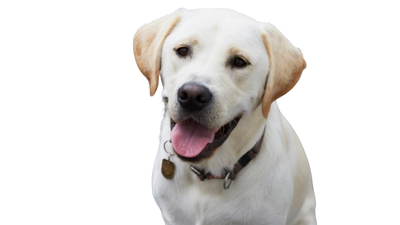
A working Labrador settles at its handler's feet.
German Shepherds still have a place. The DOJ, explaining why it rejected local breed bans for service dogs, named German Shepherds among the breeds that "have successfully served as service animals for decades." But in UK guide dog data, the German Shepherd "had a shorter working life" than other breeds (Caron-Lormier et al., The Veterinary Journal, 2016).

German Shepherds were the first guide dogs and are still used by some schools.
If breed matters, why do so many purpose-bred dogs wash out?
Because breed is only a starting point. The 2019 Canine Companions study says "even among dogs that are specifically bred for these tasks, the rate of success typically ranges from 30 to 50%." At Canine Companions itself, "the success rate over the past 13 years has averaged 43% when breeders and medical releases are excluded."

Sources: Bray et al., PNAS (2017) and Frontiers in Veterinary Science (2019); Ennik et al., Journal of Veterinary Behavior (2006). Each figure uses a different group and definition of success.
Most dogs fail on temperament, not health. Early guide dog research found "The most common reasons for rejecting dogs are fearfulness, dog distraction, excitability, health and physical reasons and hip dysplasia" (Goddard and Beilharz, Theoretical and Applied Genetics, 1982). That's why programmes breed their own lines and then test each puppy.
The breed label says less than people think. A 2022 genetics study of thousands of dogs found "Breed explains just 9% of behavioral variation in individuals" (Morrill et al., Science, 2022). Genes still matter, but at the level of the individual dog and its family line. Our post on what breed does and doesn't tell you about personality goes further.
What tasks do service dogs do?
Under the ADA, a service dog must be "individually trained to do work or perform tasks for the benefit of an individual with a disability." The regulation lists examples: "assisting individuals who are blind or have low vision with navigation and other tasks, alerting individuals who are deaf or hard of hearing to the presence of people or sounds, providing non-violent protection or rescue work, pulling a wheelchair, assisting an individual during a seizure, alerting individuals to the presence of allergens, retrieving items such as medicine or the telephone, providing physical support and assistance with balance and stability to individuals with mobility disabilities, and helping persons with psychiatric and neurological disabilities by preventing or interrupting impulsive or destructive behaviors" (28 CFR § 36.104).
| TYPE OF SERVICE DOG | EXAMPLE TASKS |
|---|---|
| Guide dog | Guiding a person who is blind or has low vision around obstacles |
| Hearing dog | Touching the person, then leading them to a sound such as a doorbell or alarm |
| Mobility dog | Retrieving dropped items, opening doors, pulling a light manual wheelchair a short way |
| Medical alert or response dog | Alerting to high or low blood sugar; helping a person stay safe during a seizure |
| Psychiatric service dog | Interrupting anxiety, waking a person from nightmares, creating space in a crowd |
Sources: 28 CFR 36.104; DOJ ADA guidance and FAQ; Canine Companions; Dogs for Better Lives; K9s For Warriors.
The programmes describe their tasks in plain terms. Canine Companions trains dogs to "Retrieve and deliver dropped items" and "Pull a lightweight manual wheelchair over a short distance." Dogs for Better Lives says "Hearing Dogs are trained to alert to sounds by making physical contact then leading you to the sound." Retrieving is a core skill, and a 2022 genetics study found "Retrieving is the most heritable behavioral trait" of those it measured. Our guide to teaching a reliable retrieve covers the basics, and jobs dogs still do better than machines covers more.
Comfort alone isn't a task. The same regulation says "The crime deterrent effects of an animal's presence and the provision of emotional support, well-being, comfort, or companionship do not constitute work or tasks for the purposes of this definition."
Can a small dog be a service dog?
Yes. When the DOJ wrote the current rules, it considered size limits and decided against them: "Balancing concerns expressed in favor of and against size and weight limitations, the Department has determined that such limitations would not be appropriate" (28 CFR Part 36, Appendix A).

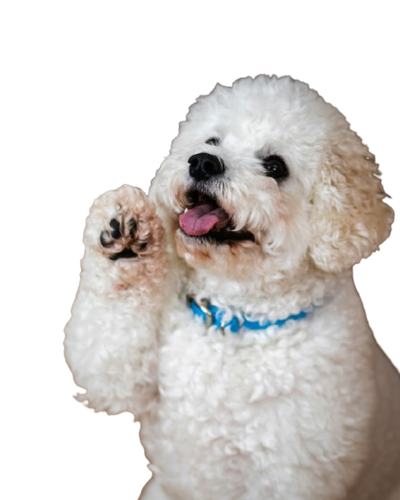
Small dogs can do alert and hearing work.
Small dogs do real work. Among 27 glycaemia alert dogs trained by one UK charity, the breeds "also included a Bichon Frise (1), Cocker Spaniels (2), a Poodle (1), a Poodle cross (1), a Staffordshire Bull Terrier (1), an English Springer Spaniel (1) and a Yorkshire Terrier (1)" alongside retrievers (Rooney et al., PLoS One, 2019). Dogs for Better Lives says "We use dogs of all sizes and look for dogs that are motivated by toys and treats."
Size still has to fit the task. In the DOJ's rulemaking record, commenters argued that "many tasks performed by service animals require large, strong dogs," and the DOJ noted "Many individuals of larger stature require larger dogs." A small dog can alert; it can't brace an adult or pull a wheelchair. On planes, a large dog that doesn't fit the foot space may need to move seats.
Can a pit bull or other "banned" breed be a service dog?
Yes, under the ADA. The DOJ says "Municipalities that prohibit specific breeds of dogs must make an exception for a service animal of a prohibited breed, unless the dog poses a direct threat to the health or safety of others." It adds "A service animal may not be excluded based on assumptions or stereotypes about the animal's breed or how the animal might behave." Airlines follow the same idea: "You must not deny transportation to a service animal based on the animal's breed or type" (14 CFR Part 382).
Behaviour is what counts. Any service dog of any breed can be asked to leave if it's out of control and the handler doesn't take effective action, or if it isn't house-trained. For housing rules, see our service dog vs emotional support dog guide.
What makes a good PTSD or psychiatric service dog?
It has to be trained to act. The DOJ says a dog "trained to sense that an anxiety attack is about to happen and take a specific action to help avoid the attack or lessen its impact" qualifies as a service animal. "However, if the dog's mere presence provides comfort, that would not be considered a service animal under the ADA." We found no study comparing breeds for psychiatric work.
A 2024 study of K9s For Warriors dogs, most of them mixed breeds, found "partnership with a trained psychiatric service dog was associated with lower PTSD symptom severity and higher psychosocial functioning in veterans." That study wasn't randomised. Its trained tasks included "interrupt or alert to anxiety, calm or comfort anxiety, block (create space), cover (watch back), and make a friend (social greeting)."
Veterans themselves rank the tasks. In a 2020 survey, "the service dog's trained tasks of calming and interrupting anxiety were perceived as the most important for veterans' PTSD." Yet the same veterans "rated the service dog's untrained behaviors on average as more important for their PTSD" (Rodriguez et al., Frontiers in Psychology, 2020). Both matter to the people who live with these dogs, though only the trained tasks make a dog a service dog under the law.
There's also a gap in the VA's own rules. Its service dog benefit covers veterans "diagnosed as having a visual, hearing, or substantial mobility impairment" (38 CFR § 17.148). For PTSD, the VA runs a pilot in which "Veterans living in the community who are experiencing symptoms of PTSD" train "candidate service dogs for fellow Veterans" (VA Palo Alto Health Care, PAWS, 2026).
How reliable are medical alert dogs?
It depends on the study. For diabetes, two studies disagree. A US study of eight users found "Dogs provided timely alerts in 36% (sensitivity) of all hypoglycemia events (n = 45)," and "Due to inappropriate alerts, the PPV of a dog alert for hypoglycemia was 12%," meaning most alerts weren't real lows (Los et al., Journal of Diabetes Science and Technology, 2017). A continuous glucose monitor beat the dog in 73% of events.
For seizures, the evidence is thinner. A 2018 review found that "scientific data are still too scarce and preliminary to reach any definitive conclusion regarding the success of dogs in alerting for an impending seizure, the cues on which this ability may be based, the best type of dog, and associated training" (Catala et al., PLoS One, 2018). Helping a person during a seizure is a recognised task. Predicting one isn't proven. Canine Companions and NEADS both say they don't train seizure alert dogs.
Which health problems cut working careers short?
Joint problems, especially. The Orthopedic Foundation for Animals publishes hip and elbow screening results by breed. Among dogs screened, 11.3% of Labradors, 19.3% of Golden Retrievers and 20.4% of German Shepherds were graded dysplastic at the hip. For elbows, the figures were 9.9%, 11.8% and 18.7% (OFA, Disease Statistics). Poodles came in at 11.6% for hips and 3.4% for elbows, and Bernese Mountain Dogs at 16.3% and 26.6%.

Source: Orthopedic Foundation for Animals, Disease Statistics, retrieved October 2026. Owners choose which dogs to submit, so these aren't breed-wide rates.
These are dogs whose owners chose to submit X-rays, not every dog in the breed. Programmes screen for it: Guide Dogs UK says "This includes genetic screening, hip and elbow scores, and regular ophthalmic (eye) exams."
Careers last about seven to nine years. In UK guide dog records covering 7,686 dogs, "The majority (n = 6465/7686; 84%) of working guide dogs were able to function as guide dogs until they had worked for 8.5 years, when they retired." The most common health reason for early retirement was "musculoskeletal conditions (n = 387/1362; 28%), mostly arthritis." Canine Companions says "The average service dog then works for eight years." The DOJ's 2010 estimate was "approximately seven years."
Before you pick a puppy for service work
- Choose the individual, not the breed. Temperament causes most failures, and breed explains only 9% of behaviour.
- Ask for hip and elbow scores for both parents.
- Match size to the task. Alert work suits small dogs; bracing and wheelchair work need a large, strong one.
- Expect long odds. Even purpose-bred programme dogs succeed 30 to 50% of the time.
- Plan the training. The ADA lets you train your own dog; our guide to how to make your dog a service dog covers the steps.
House-training comes first, because the ADA lets a business remove a service dog that isn't house-trained. Training Pads help with a puppy at home. Programmes like Dogs for Better Lives say "The dogs are trained with positive reinforcement," and a treat pouch with a built-in bag dispenser keeps rewards and poop bags in one place, since the DOJ says "Staff are not required to provide care for or supervision of a service animal."
Frequently Asked Questions
Can any breed be a service dog?
Yes. The DOJ says the ADA doesn't restrict breeds, and local breed bans must exempt service dogs unless the dog poses a direct threat. In practice, big programmes breed mostly Labradors, Golden Retrievers and their crosses, because those lines graduate most often. At Guide Dogs UK, over 60% of working guide dogs are Lab and Golden crosses.
Can a small dog be a service dog?
Yes. The DOJ rejected size and weight limits, and small dogs do alert and hearing work; a Yorkshire Terrier and a Bichon Frise were among 27 UK glycaemia alert dogs in one study. Size must fit the task, though. Bracing an adult or pulling a wheelchair needs a large, strong dog.
What is a PTSD service dog called, and what does it do?
The DOJ calls it a psychiatric service animal. It must be trained to take specific actions, such as interrupting anxiety, waking a person from nightmares, or creating space in a crowd. In a VA trial, veterans with service dogs had a 3.7-point greater drop in PTSD symptoms than those with emotional support dogs.
How long do service dogs work?
Usually seven to nine years. Canine Companions says its dogs work eight years on average after being matched at about two years old. In UK guide dog records, 84% of dogs worked until retiring at 8.5 years. Arthritis and other joint problems were the most common health reasons for retiring early.
Does a service dog need to be registered?
No. The DOJ says online certificates and registrations do not convey any rights under the ADA, and mandatory registration isn't allowed. A service dog still needs the same city licence and vaccinations as any dog. Our guide to making your dog a service dog explains why there's no official registry.
The short version
The dogs that big programmes breed are mostly Labradors, Golden Retrievers and their crosses, with German Shepherds at some guide dog schools and mixed-breed shelter dogs in much of the veterans' work. But even purpose-bred dogs succeed only 30 to 50% of the time at most assistance programmes, mostly because of temperament.
So pick the individual dog, not the breed. Check hip and elbow scores, match size to the task, and remember that what makes a service dog is the trained task, not the breed or a vest. This Veterans Day, the evidence suggests trained dogs give veterans with PTSD a modest but real edge.
Sources: the US Department of Justice and the Code of Federal Regulations, the Department of Veterans Affairs, service and guide dog programmes' own published pages, the Orthopedic Foundation for Animals and the peer-reviewed literature. Specific pages consulted are listed below.
This guide is general information, not legal or veterinary advice.
SOURCES & CITATIONS
Canine Companions — FAQs, updated 1 Oct 2026, retrieved 2026-10-09 https://canine.org/faqs/
America's VetDogs — Frequently Asked Questions, retrieved 2026-10-09 https://www.vetdogs.org/AV/About/FrequentlyAskedQuestions/AV/About_Us/Frequently_Asked_Questions.aspx
NEADS — Frequently Asked Questions, retrieved 2026-10-09 https://neads.org/faq/
The Seeing Eye — FAQ, updated 22 Sep 2026, retrieved 2026-10-09 https://www.seeingeye.org/about-us/faq
Guide Dogs UK (The Guide Dogs for the Blind Association) — Crossbreeds, retrieved 2026-10-09 https://guidedogs.org.uk/getting-support/guide-dogs/our-breeds/crossbreeds
Guide Dogs UK — German shepherd, retrieved 2026-10-09 https://www.guidedogs.org.uk/getting-support/guide-dogs/our-breeds/german-shepherd
Guide Dogs UK — Labrador retriever, retrieved 2026-10-09 https://guidedogs.org.uk/getting-support/guide-dogs/our-breeds/labrador-retriever
K9s For Warriors — FAQ, retrieved 2026-10-09 https://k9sforwarriors.org/faq/
Leighton EA, et al. — JAMA Network Open, 2024, retrieved 2026-10-09 https://pmc.ncbi.nlm.nih.gov/articles/PMC11151141/
Dogs for Better Lives — FAQ, retrieved 2026-10-09 https://dogsforbetterlives.org/faq/
Ennik I, et al. — Journal of Veterinary Behavior, 2006, retrieved 2026-10-09 https://research.wur.nl/en/publications/suitability-for-field-service-in-4-breeds-of-guide-dogs
Bray EE, et al. — Frontiers in Veterinary Science, 2019, retrieved 2026-10-09 https://pmc.ncbi.nlm.nih.gov/articles/PMC6400848/
Caron-Lormier G, et al. — The Veterinary Journal, 2016, retrieved 2026-10-09 https://pubmed.ncbi.nlm.nih.gov/26616425/
Bray EE, et al. — PNAS, 2017, retrieved 2026-10-09 https://pmc.ncbi.nlm.nih.gov/articles/PMC5576795/
Goddard ME, Beilharz RG — Theoretical and Applied Genetics, 1982, retrieved 2026-10-09 https://pubmed.ncbi.nlm.nih.gov/24270555/
Morrill K, et al. — Science, 2022, retrieved 2026-10-09 https://pmc.ncbi.nlm.nih.gov/articles/PMC9675396/
Rooney NJ, et al. — PLoS One, 2019, retrieved 2026-10-09 https://pmc.ncbi.nlm.nih.gov/articles/PMC6333402/
Richerson J, et al. — Psychiatric Services, 2023, retrieved 2026-10-09 https://pubmed.ncbi.nlm.nih.gov/36718602/
Rodriguez KE, et al. — Frontiers in Psychology, 2020, retrieved 2026-10-09 https://pubmed.ncbi.nlm.nih.gov/32849004/
Los EA, et al. — Journal of Diabetes Science and Technology, 2017, retrieved 2026-10-09 https://pmc.ncbi.nlm.nih.gov/articles/PMC5505410/
Catala A, et al. — PLoS One, 2018, retrieved 2026-10-09 https://pubmed.ncbi.nlm.nih.gov/30513112/