





Pee Pads for Dogs & Puppy Training Pads: 6-Layer Leak Protection
6 protective layers. Leak-proof base. Built for puppies learning their routine and dogs who need a little extra help.
Pre-Black Friday Sale! 10% OFF Sitewide, no code needed!

1 product
Choose an option

Pet N Pet training pads have 6 protective layers and a leak-proof base. Liquid soaks in from the top and doesn't bleed through, so your floor stays dry even if the pad gets a second use before you get there.
Each pad is 22 x 23 inches, a standard training-zone size that fits most crate inserts and apartment setups, and holds about 4 to 5 cups in our testing.
USDA Certified Biobased (48%): the share of plant-derived content is verified under the USDA BioPreferred Program. That's a material-content certification, not a claim about how the pad breaks down after use.
Built for learning. Built for the days your older dog needs the same patience you gave them as a puppy. Not sure how long you'll need them? Read when to stop using puppy pads.
Free shipping on all orders $30 and over.
Plan on more than you expect early and fewer than you fear later. A young puppy needs a pad change after each use because a soiled pad stops attracting them to the right spot, which is the entire mechanism you are training. That means several a day at eight to twelve weeks, tapering as bladder control develops. A 6-layer pad holding 4 to 5 cups buys you tolerance for a missed change overnight, which is the real reason absorbency capacity matters more than pad count. For a day-by-day count and what it costs, see how many puppy pads you need per day.
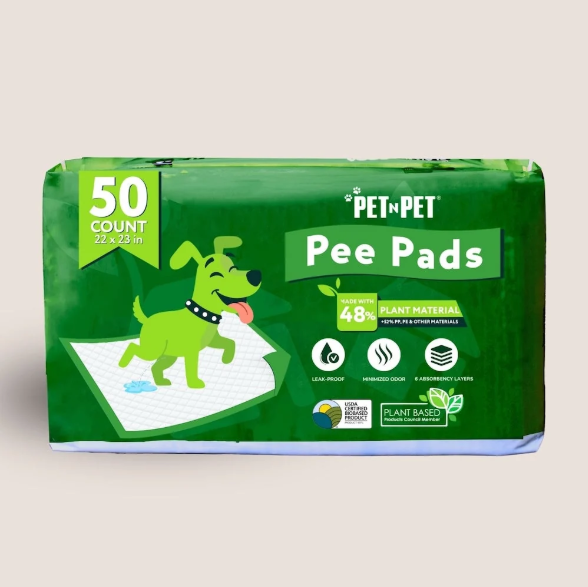
Size to the space, not the dog. A 22 by 23 inch pad covers a standard crate floor and gives an adult dog room to turn without stepping off the edge, which is where most misses actually happen. Place it away from food and water, in a spot the dog can reach without going through a door that might be shut, and do not move it once training has started. Consistency of location does more for success than any pad specification.
No, our pee pads are not machine washable. They’re designed for single use to keep cleanup quick and hygienic.
No. Our pee pads are designed with 6 protective layers to help prevent leaks and keep your floors dry.
Yes. Pet N Pet training pads are USDA Certified Biobased (48%), verified under the USDA BioPreferred Program. The figure is the share of the pad's carbon that comes from renewable plant sources. It's a material-content certification, not a claim that the pad breaks down after use, so dispose of used pads with household waste.
In our testing, each pad holds about 4 to 5 cups of liquid, helping keep messes contained and floors dry.
Each pad is 22 x 23 inches, the standard size for most puppy training zones, crate inserts, and apartment setups. For small to medium breeds, one pad covers the entire designated area comfortably. For large and giant breeds, we recommend placing two pads side by side to give your dog a full landing zone.
Yes. Senior dogs managing incontinence, dogs recovering from surgery, and arthritic dogs who can't always make it to the door in time can use the same 6-layer, leak-proof pad as a puppy in training. The only difference is placement: for senior dogs, put pads near the spots where they rest most rather than in a dedicated training zone. If accidents are new or sudden, check with your vet first.
Young puppies need a fresh pad after each use, so expect several a day at 8 to 12 weeks, tapering as bladder control develops. At 2 to 4 pads a day, a 50-count pack lasts about 2 to 3½ weeks; at 1 to 2 a day, about 4 to 7 weeks. If you have more than one dog, or a senior dog alongside a puppy, plan for more.
Roughly 4 to 5 cups, with a dry-lock base that stops seepage onto the floor beneath. Capacity matters more than pad count for overnight and crate use, because a pad that holds through the night is the difference between a clean crate and a full clean-up.

Your cart is currently empty.
Continue shopping

