

· By Steven Wong
Do Dogs Feel Guilt? The Science of the 'Guilty Look'
Published September 2026 · Pet N Pet Editorial · National Dog Day Science Series
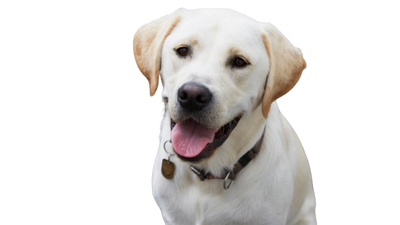
You come home, the trash is everywhere, and there's your dog: head down, ears back, refusing to meet your eyes. It sure looks like guilt. But the landmark study on this found something that flips the story. When researchers had owners scold dogs, the dogs gave the classic "guilty look" whether or not they'd actually done anything, and the effect was strongest in the dogs that had obeyed and were scolded anyway (Horowitz, Behavioural Processes, 2009).
In other words, the guiltiest-looking dogs were often the innocent ones. That single result reframes the whole question. The look isn't tracking a misdeed. It's tracking you. Here's what the research actually supports, and, just as important, what it doesn't let us conclude.

The Study That Started It All
In 2009, cognitive scientist Alexandra Horowitz ran a clever experiment with 14 dogs. She separated what the dog did from what the owner believed. Dogs were told not to eat a treat while the owner left the room. Sometimes the dog obeyed, sometimes it didn't, and, crucially, owners were sometimes told the wrong story about what had happened (Horowitz, Behavioural Processes, 2009).
The result cut clean through the folk wisdom. Whether a dog had actually eaten the forbidden treat made no difference to how "guilty" it looked. What made the difference was the owner's behavior. Dogs that got scolded produced the head-drop, the averted eyes, the tail tuck. And the kicker: the look was more pronounced in obedient dogs who were scolded despite having done nothing wrong.
Horowitz's conclusion was blunt. The so-called guilty look is better described as a response to owner cues than as a sign the dog understands it did something wrong. The dog isn't confessing. It's reacting, in real time, to your tone and body language.
Later Studies Pointed the Same Way
Horowitz's finding held up. A study of roughly 64 dogs found that dogs which had eaten a forbidden food were no more likely to greet their owner with "guilty" behavior than dogs that had resisted it (Hecht, Miklósi, and Gácsi, Applied Animal Behaviour Science, 2012). The greeting simply isn't a reliable readout of whether a rule was broken.
A 2015 study made the point even sharper. Researchers varied both whether a dog ate a forbidden food and whether the evidence was visible when the owner returned. Owners trying to guess from their dog's greeting whether it had eaten the food did no better than a coin flip (Ostojić, Tkalčić, and Clayton, Behavioural Processes, 2015). The dogs' behavior wasn't driven by their own actions or by the evidence lying around. It was driven by the owner's reaction, or the lack of one.
Put together, three independent studies say the same thing: the guilty look is a present-moment response to human cues, not a window into a dog's memory of wrongdoing.
If It's Not Guilt, What Is It?

The most supported explanation is that the "guilty look" is a bundle of appeasement and stress signals. The lowered head, the flattened ears, the averted gaze, the tucked tail, the slinking away are all recognized ways dogs de-escalate tension with a human or another dog. They're saying, in effect, "I'm not a threat, please ease off," not "I regret my actions."
And dogs are very good at reading us. Over thousands of repetitions, a dog learns that a certain tone, posture, or the sight of a mess plus an approaching human tends to precede trouble. Offering appeasement signals early often works, it makes people soften. So the behavior is likely learned and reinforced, which is a more parsimonious explanation than a dog experiencing human-style guilt every time you raise your voice.
So Can Dogs Feel Guilt At All? Be Careful Here
This is where a lot of articles are overcorrected. "Science proves dogs can't feel guilt" is not what these studies show. They show the guilty look is not reliable evidence of guilt. That is a claim about a behavior, not about a dog's entire inner life. Absence of good evidence for a feeling isn't proof the feeling is absent.
Guilt is what psychologists call a secondary, self-conscious emotion. It's thought to require a sense of self and some ability to model how others judge you, cognitive equipment that's genuinely uncertain in dogs. Dogs do show a rudimentary sense of self in one test, spending longer investigating their own odor when it had been altered (Horowitz, 2017). But other researchers argue that study lacked proper controls (Gallup and Anderson, 2018), so canine self-awareness is still an open question. Dogs clearly have primary emotions like fear and joy. Whether they build anything like guilt on top of those is simply not known. The honest answer is a shrug, not a verdict.
What This Means for Living With Your Dog
The practical takeaway is freeing. If the guilty look isn't a confession, then scolding a dog after you discover a mess accomplishes nothing useful. The dog isn't connecting your anger to something it did an hour ago. It's just learning that you sometimes come home scary, which can breed anxiety, not better behavior.
Far more effective: manage the environment so mistakes are less likely, catch and redirect behavior in the moment, and reward what you want to see. When you find an accident after the fact, the best move is to clean it up calmly and adjust your setup, not to lecture a dog who's giving you appeasement signals it learned precisely because lecturing happens.
Frequently Asked Questions
Do dogs actually feel guilt, or do they just look guilty?
The evidence says the "guilty look" is not proof of guilt. In the foundational study, dogs gave the look based on whether they were scolded, not whether they'd misbehaved, and innocent-but-scolded dogs looked guiltiest (Horowitz, 2009). Whether dogs feel any guilt-like emotion internally is unknown, since the studies test the behavior, not the feeling.
What does my dog's guilty look actually mean?
It's most likely a set of appeasement and stress signals, lowered head, ears back, averted eyes, tucked tail, aimed at defusing tension with you. Dogs learn that offering these signals when you seem upset tends to make you soften. It's a real-time reaction to your cues, not a sign your dog is replaying a misdeed in its head.
Does punishing my dog after the fact work?
No. Dogs don't reliably connect delayed punishment to a past action, and the "guilty look" is a response to your current behavior, not evidence of understanding. Scolding after you find a mess tends to create anxiety rather than better behavior. Managing the environment and rewarding good choices in the moment works far better.
Can dogs feel other complex emotions like shame or jealousy?
There's even less evidence for shame than for guilt, and no study quantifies either as a felt emotion in dogs. Jealousy has some experimental support, but self-conscious emotions in general require cognitive abilities that are unproven in dogs. Dogs clearly feel primary emotions like fear and joy; the complex, self-aware ones remain scientifically uncertain.
Are dogs self-aware?
Partly, maybe. One study found dogs spent longer investigating their own odor when it was altered, an olfactory version of the mirror self-recognition test (Horowitz, 2017). But other scientists argue it lacked adequate controls (Gallup and Anderson, 2018). So a dog's sense of self, the thing an emotion like guilt would require, is still genuinely debated.
Bottom Line
That heart-melting guilty face is real, but it's probably not guilt. The best evidence says your dog is reading your mood and offering the appeasement signals that have worked before, whether or not it did anything wrong. Innocent dogs pull off the look just as well. What science can't tell us is whether some quieter guilt-like feeling exists underneath, because a lowered head is not a window into a dog's soul. So enjoy the drama, skip the after-the-fact lecture, and clean up the trash without holding a grudge. Your dog already let it go.
SOURCES & CITATIONS
Horowitz, A. "Disambiguating the 'guilty look': Salient prompts to a familiar dog behaviour," Behavioural Processes 81(3):447-452 (2009). 14 dogs; the look tracked owner scolding, not actual misbehavior. https://pubmed.ncbi.nlm.nih.gov/19520245/
Hecht, Miklósi, Gácsi "Behavioral assessment and owner perceptions of behaviors associated with guilt in dogs," Applied Animal Behaviour Science 139(1-2):134-142 (2012). Dogs that ate forbidden food were not more likely to look guilty. https://www.sciencedirect.com/science/article/pii/S0168159112000652
Ostojić, Tkalčić, Clayton "Are owners' reports of their dogs' 'guilty look' influenced by the dogs' action and evidence of the misdeed?" Behavioural Processes 111:97-100 (2015). Owners guessed at chance level. https://pubmed.ncbi.nlm.nih.gov/25562192/
Horowitz, A. "Smelling themselves: Dogs investigate their own odours longer when modified in an 'olfactory mirror' test," Behavioural Processes (2017). Rudimentary self-recognition in 36 dogs. https://psychology.barnard.edu/sites/default/files/inline-files/Smelling%20themselves.pdf
Gallup, Anderson Critique arguing the canine 'olfactory mirror' test lacked adequate controls (2018); canine self-recognition remains contested. https://www.wellbeingintlstudiesrepository.org/animsent/
Riemer, S. "Social dog emotional dog?" Animal Sentience 14(9) (2017). Review of primary vs. secondary emotions in dogs. https://www.wellbeingintlstudiesrepository.org/cgi/viewcontent.cgi?article=1255&context=animsent