

· By Steven Wong
The Neuroscience of Puppy Dog Eyes: Why the Face Works on You
Published August 2026 · Pet N Pet Editorial · National Dog Day Data & Culture Series
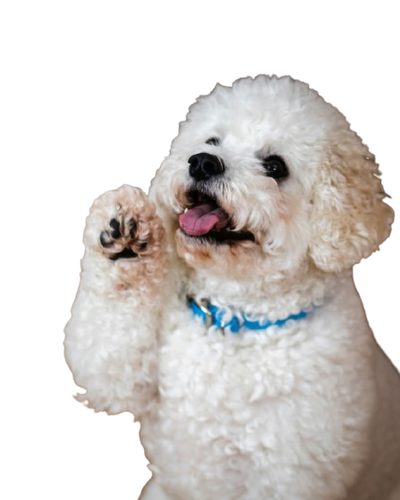
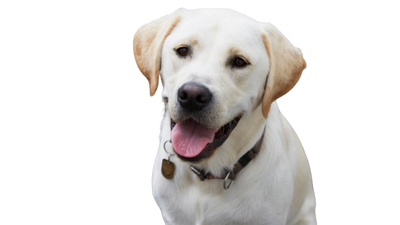
That melting look your dog gives you isn't just cute, it's a genuine piece of evolutionary hardware, and it may have literally saved lives. Dogs evolved a small muscle, largely absent in wolves, that lets them raise their inner eyebrows and make their eyes look bigger and more infant-like (Kaminski et al., PNAS, 2019). And in a study of shelter dogs, the ones that made this expression more often were adopted significantly faster (Waller et al., PLOS ONE, 2013).
In other words, the puppy-dog-eyes face isn't random. It's a signal your dog's anatomy is built to send, and your brain is wired to answer. Here's the neuroscience of how the face is made, why it works on you, and the honest line between what's proven and what's a very good hypothesis.

The Muscle That Makes the Face
The engine behind puppy dog eyes is a specific muscle: the levator anguli oculi medialis, which raises the inner corner of the eyebrow. When researchers dissected and compared dog and wolf faces, they found this muscle reliably formed in dogs but present only as scant, vestigial fibers in wolves (Kaminski et al., PNAS, 2019). Behaviorally, dogs made the inner-brow raise far more often than wolves, a median of 10 times versus 2 in a two-minute window, and only dogs produced the highest-intensity version.
These differences tracked roughly 33,000 years of dogs living alongside people. One honest wrinkle: it isn't universal. In the same study, a Siberian husky, one of the more ancient, wolf-like breeds, lacked a clearly developed version of the muscle. So this is a strong trend across dogs, not an ironclad law that every single dog obeys. That nuance matters, and we'll come back to it.
The Study That Shows the Face Actually Works
Here's the finding that turns a cute fact into something with stakes. Researchers filmed 27 shelter dogs and measured how often each raised its inner brow, the movement scientists label AU101. Then they tracked how long each dog waited to be adopted. The dogs that made the expression more frequently got homes significantly faster (Waller et al., PLOS ONE, 2013).
The effect was real and specific. It followed a clear statistical relationship (R² = 0.39, p < 0.005), and modeling the data showed a dog that raised its brows about 5 times per observation faced a predicted wait of roughly 50 days, while one that did it 15 times was predicted to wait only about 28. Crucially, it was the facial expression that predicted adoption speed, not tail-wagging or general friskiness. The eyebrows, specifically, were doing the work.
Why Dog Faces Move the Way They Do
It's not just which muscles dogs have, but how those muscles are built. Muscle is made of fast-twitch fibers, which fire quickly for rapid movements, and slow-twitch fibers, which are built for slow, sustained effort. When researchers looked at the facial muscles of dogs versus wolves, they found dog facial muscles are predominantly fast-twitch, and more so than wolves' (Burrows et al., The Anatomical Record, 2025).
That fiber makeup is what lets a dog's face move fast and expressively, snapping into the raised-brow look in an instant rather than shifting slowly like a wolf's. Wolves, by contrast, carry relatively more slow-twitch fibers in the same muscles. The upshot is a face physically optimized for quick, readable signals, the kind of rapid expressiveness that communicates well with a species, us, that reads faces constantly.
Why It's Physically Hard for You to Resist
The other half of the story is your brain. Humans are wired to respond to what ethologist Konrad Lorenz called the baby schema: large eyes, a rounded face, infant-like proportions. When people view faces with these features, it activates the nucleus accumbens, a core part of the brain's reward and motivation system (Glocker et al., PNAS, 2009). That's the neural basis of the "aww" reflex and the urge to care for something.
The raised-inner-brow expression nudges a dog's face toward exactly that infant template, bigger-looking eyes, a more vulnerable look. So the signal your dog sends lands right on a reward button evolution already installed in you for human babies. There's a related loop, too: simply gazing into each other's eyes raises oxytocin in both dog and owner, a bonding effect not seen between people and wolves (Nagasawa et al., Science, 2015). The face doesn't just look appealing. It triggers a measurable response.
The Honest Part: 'Built to Charm' Is a Hypothesis, Not a Confession
It's tempting to say dogs evolved this face specifically to manipulate us, and that's where science asks for care. What's measured is clear: the muscle exists in dogs and not most wolves, dog faces are fast-twitch and expressive, brow-raisers get adopted faster, and human brains reward the look. What's inferred is the causal story, that thousands of years of humans unconsciously preferring dogs who made the expression is what shaped the muscle. That's a strong, well-argued hypothesis, but it's a reconstruction of the deep past, not something anyone directly watched happen.
So the accurate framing is co-evolution, not con artistry. Dogs almost certainly aren't consciously deploying the look to trick you. It's a signal that human preference likely favored over generations, which is a very different and more interesting claim than deliberate manipulation. And the picture is still being refined, with the husky exception and even some emerging work questioning whether these muscles are truly unique to domestic dogs. The honest version: the face is real, its effect on us is real, and the story of how it got here is a compelling hypothesis we're still filling in.
Frequently Asked Questions
Why do dogs make puppy dog eyes?
They raise the inner corners of their eyebrows using a muscle called the levator anguli oculi medialis, which makes their eyes look bigger and more infant-like (Kaminski et al., 2019). That look taps into the human brain's reward response to baby-like faces (Glocker et al., 2009), which is why it's so effective at getting your attention and care.
Can wolves make puppy dog eyes?
Barely. Wolves have only vestigial traces of the inner-brow muscle that dogs have as a formed muscle, and they raise their inner brows far less often, a median of about 2 times versus 10 for dogs in one study (Kaminski et al., 2019). So it's not that wolves can't at all, but they do it rarely and with much less intensity.
Do puppy dog eyes actually help dogs get adopted?
Yes, measurably. In a study of 27 shelter dogs, those that raised their inner brows more often were rehomed significantly faster, from a modeled wait of about 50 days down to roughly 28 (Waller et al., 2013). Notably, it was the facial expression that predicted adoption speed, not tail-wagging or general activity level.
Do dogs use puppy eyes on purpose to manipulate us?
There's no evidence it's deliberate manipulation. Dogs do make the expression more when a person is paying attention, but that points to it being communicative, not consciously deceptive. The best-supported view is that human preference favored the look over evolutionary time, so dogs are built to send the signal rather than scheming to trick you with it.
Do all dog breeds have the puppy-eyes muscle?
Almost all, but not quite universally. The muscle is a strong, consistent feature across dogs, but in the anatomy study a Siberian husky, one of the more ancient and wolf-like breeds, lacked a clearly developed version (Kaminski et al., 2019). So it's a near-universal dog trait with the occasional exception, especially among older, wolf-adjacent breeds.
Bottom Line
Puppy dog eyes are one of the most quietly remarkable things about living with a dog. There's a real muscle behind the look, one wolves mostly lack, and a fast-twitch facial build that lets dogs flash it in an instant. The expression measurably helps shelter dogs find homes, and it lands squarely on a reward system your brain already reserves for infants. The one thing to hold loosely is the why: the idea that we shaped that face by falling for it is a beautiful, well-supported hypothesis, not a proven fact. Either way, the next time your dog hits you with the eyebrows, know that you're on the receiving end of tens of thousands of years of evolution. Good luck resisting.
SOURCES & CITATIONS
Waller, Peirce, Caeiro, et al. "Paedomorphic Facial Expressions Give Dogs a Selective Advantage," PLOS ONE 8(12):e82686 (2013). 27 shelter dogs; more inner-brow raises (AU101) predicted faster adoption (R²=0.39, p<0.005). https://journals.plos.org/plosone/article?id=10.1371/journal.pone.0082686
Kaminski, Waller, Diogo, Hartstone-Rose, Burrows "Evolution of facial muscle anatomy in dogs," PNAS 116(29):14677-14681 (2019). LAOM present in dogs, vestigial in wolves; dogs raise inner brows more (median 10 vs. 2); husky exception; ~33,000 years. https://pmc.ncbi.nlm.nih.gov/articles/PMC6642381/
Burrows, Smith, et al. "Evolutionary divergence of facial muscle physiology between domestic dogs and wolves," The Anatomical Record 308:1369-1377 (2025). Dog facial muscles are predominantly fast-twitch, more than wolves' (stated qualitatively). https://anatomypubs.onlinelibrary.wiley.com/doi/10.1002/ar.25580
Glocker, Langleben, Ruparel, et al. "Baby schema modulates the brain reward system in nulliparous women," PNAS 106(22):9115-9120 (2009). Infant-like faces activate the nucleus accumbens reward system. https://www.pnas.org/doi/10.1073/pnas.0811620106
Nagasawa, Mitsui, En, et al. "Oxytocin-gaze positive loop and the coevolution of human-dog bonds," Science 348(6232):333-336 (2015). Mutual gaze raises oxytocin in both dog and owner; not seen with wolves. https://pubmed.ncbi.nlm.nih.gov/25883356/